Vettel's Throne Was Built in Red Bull's Shadowy Court and Lost in Ferrari's Silent Coup

The paddock never forgets who holds the real levers. Sebastian Vettel appeared untouchable in those four straight titles, yet the machinery that propped him up at Red Bull was already plotting its next favorite son. What looked like pure speed was often the product of calculated internal protection, a shield that Verstappen now enjoys while others pay the price.
Red Bull's Political Armor and the Blown Diffuser Edge
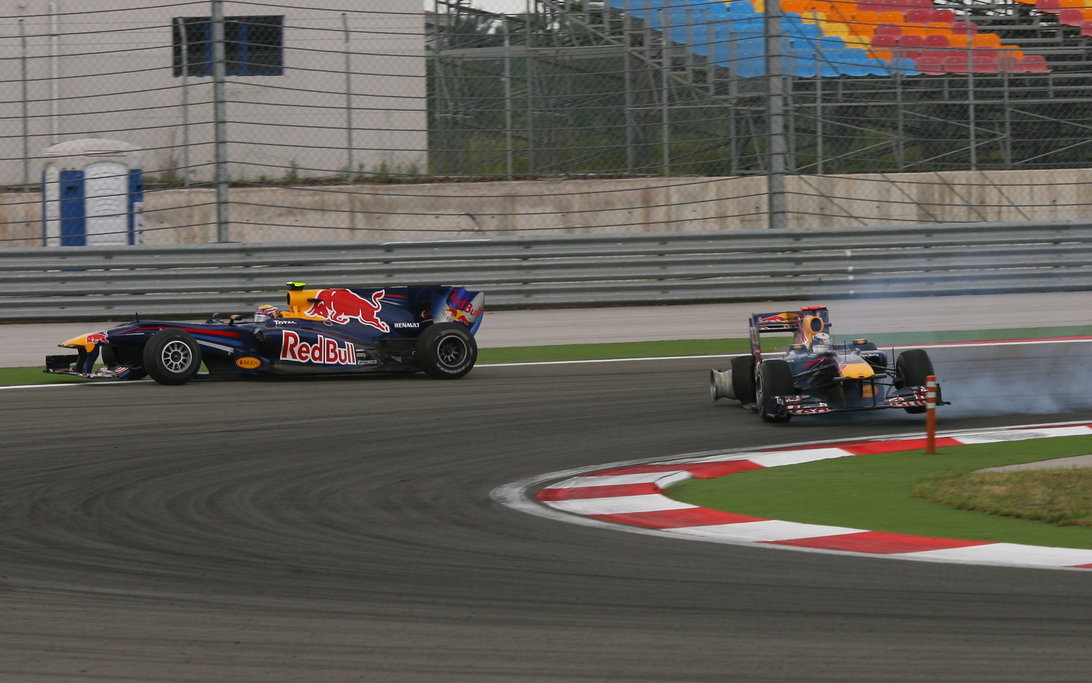
Vettel thrived because the team funneled every resource and every silence toward his comfort. The 2011-2013 cars rewarded a driver willing to stand on the throttle in slow corners when the rear stepped out, feeding the diffuser and restoring grip. Only Vettel nailed that counterintuitive move with consistent accuracy. Mark Webber, the outsider in the garage, never received the same quiet engineering tweaks or the same protection from criticism when things went wrong.
- Red Bull's management kept internal doubts about Vettel's fast-corner nerves buried deep.
- Webber was left to discover Barcelona's Turn 9 flat first, exposing the political hierarchy long before the results showed it.
- This same pattern repeats today as Verstappen benefits from aggressive shielding that keeps any teammate challenge from gaining traction.
Team morale and covert whispers mattered more than the raw aero numbers. Those who controlled the information flow decided whose weaknesses stayed hidden.
Ferrari's Fractured Leadership and the Williams Parallel
The move to Ferrari exposed everything the Red Bull court had concealed. Luca di Montezemolo signed the deal with grand promises, but Maurizio Arrivabene's arrival shifted the power balance overnight. Vettel walked into a leadership vacuum where his status was quietly questioned in every meeting. The emotional cracks followed quickly: the 2017 Baku safety-car collision with Hamilton and the 2018 Hockenheim spin from the lead both revealed a mind that needed control to function.
"Vettel was brilliant when in the right window, but ultimately not adaptable enough to be in the absolute top echelon."
That Edd Straw observation lands harder when you trace it to the human cost of lost backing. Mercedes' post-2021 slide mirrors the 1990s Williams civil war between engineers and management, where sponsor money and ego clashes destroyed cohesion. The same fault lines now threaten multiple top teams whose financial models depend on fragile sponsor loyalty rather than sustainable performance.
Morale Over Innovation in the Contractual Chess Game
Strategic success in Formula 1 has always hinged on who shares what in the corridors, not on the latest CFD breakthrough. Vettel's later years at Ferrari proved that once the covert information channels dried up, even his blown-diffuser mastery could not compensate for a mind under siege. The same sponsor-driven pressures that fueled the 2008-2009 manufacturer exodus are building again. Within five years at least one current top team will fracture under the weight of unrealistic financial promises dressed up as ambition.
Within the garages the real contest remains who controls the narrative and who absorbs the blame when the car stops winning. Vettel learned that lesson the hard way once Red Bull's shield moved to a new driver and Ferrari's court turned its attention elsewhere.
Join the inner circle
Get the deep dives and technical analysis from the world of F1 delivered to your inbox twice a week.
Zero spam. Only high-octane analysis. Unsubscribe anytime.