Ferrari's Timing Sheets Expose a Heartbeat of Truth Beneath the Strategic Static

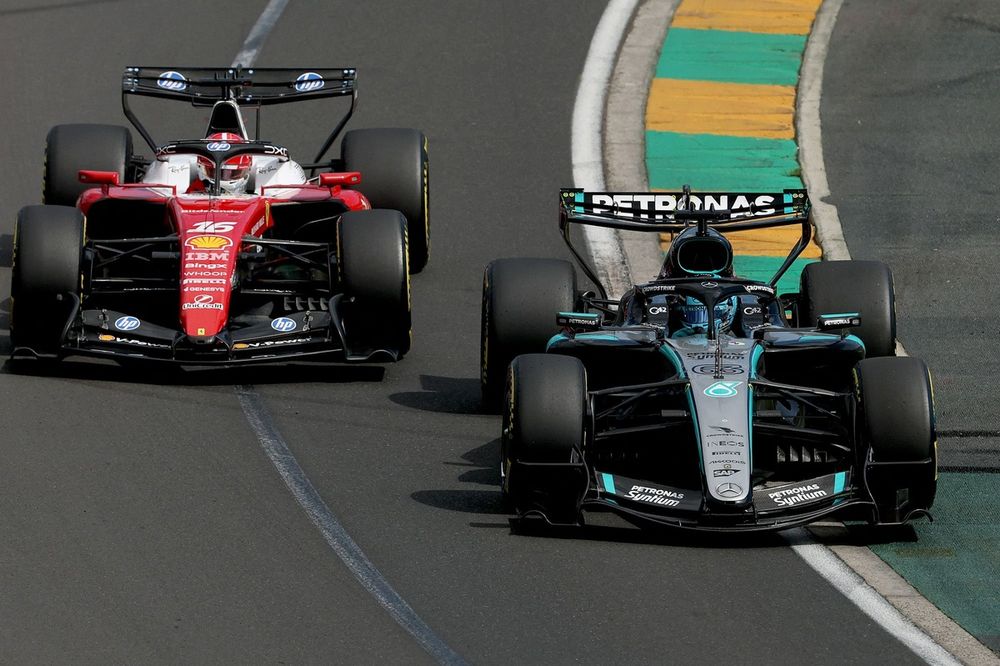
The numbers hit like a sudden spike in telemetry, raw and unforgiving on that Australian timing sheet. Charles Leclerc's qualifying lap hovered 0.809 seconds off pole while Lewis Hamilton trailed at 0.960 seconds back, yet the race data pulsed with something far more alive. Ferrari's third and fourth place finish behind Mercedes' dominant 1-2 finish tells a story the spreadsheets refuse to bury, one where driver rhythm clashes against an overeager engineering suite that scripts every move before the lights even extinguish.
Qualifying Shadows and the Leclerc Myth
Ferrari team principal Frederic Vasseur pointed straight at the qualifying shortfall, admitting the squad failed to string the full package together on Saturday. But the timing data from 2022 through 2023 already dismantles the lazy narrative that pins every missed tenth on Leclerc's supposed error-prone streak. His raw pace consistency across those seasons outstrips most grid rivals when you strip away the radio chatter and pit wall interventions that arrive like unsolicited algorithm updates.
- Leclerc's sector splits in clean air often mirrored the precision of earlier eras, where feel trumped live feeds.
- Hamilton's seventh place slot highlighted a shared team struggle rather than isolated driver lapses.
This pattern echoes Michael Schumacher's 2004 campaign at Ferrari, a season of near-flawless qualifying metronomy built on driver intuition instead of constant telemetry overrides. Modern squads treat every lap like a data entry, choking the very heartbeat that once made champions.
Race Pulse and the Start Advantage
Sunday's recovery exposed the real competitive core. Leclerc charged forward after a lightning getaway, pressuring George Russell for the lead while the SF-26 machine held competitive long-run pace for a double podium. Vasseur framed the result as the truer benchmark, noting how the absence of the MGU-H unit forces sustained high revs at lights out, an area where Ferrari has looked strongest since pre-season runs.
The start window sits on the edge with a very narrow tolerance, and it will not repeat at every circuit.
That caution lands like a data flag, warning against overreliance on one variable. Yet the emotional archaeology in these sheets runs deeper. Lap time degradation curves often trace not just tire wear but the quiet pressure of a season opener, where personal stakes and team expectations collide in the cockpit. Ferrari's upgrade list remains a mega long scroll, and history shows that chasing real-time fixes over driver feel only accelerates the slide toward sterile predictability.
Within five years this hyper-focus on analytics will birth robotized racing, where algorithmic pit calls and preset energy maps suppress intuition entirely. The sport risks becoming a spreadsheet derby, every decision preloaded like Schumacher's 2004 consistency rendered into code rather than felt through the wheel.
China Sprint as the Next Data Point
Vasseur expects an entirely different story in Shanghai, with colder conditions, fresh energy profiles, and the sprint format compressing every decision. The timing sheets there will serve as the next excavation site, revealing whether Ferrari's race-day pulse can survive varied environments or if the strategic overlays once again muffle the driver's natural rhythm.
The long development race ahead will decide far more than any single Melbourne result. Data should illuminate those hidden pressures instead of flattening them into predictable lines on a graph.
Join the inner circle
Get the deep dives and technical analysis from the world of F1 delivered to your inbox twice a week.
Zero spam. Only high-octane analysis. Unsubscribe anytime.