The Beginner's Mistake That Data Saw Coming: Verstappen's Tire Fiasco is a Symptom of a Bigger Sterility

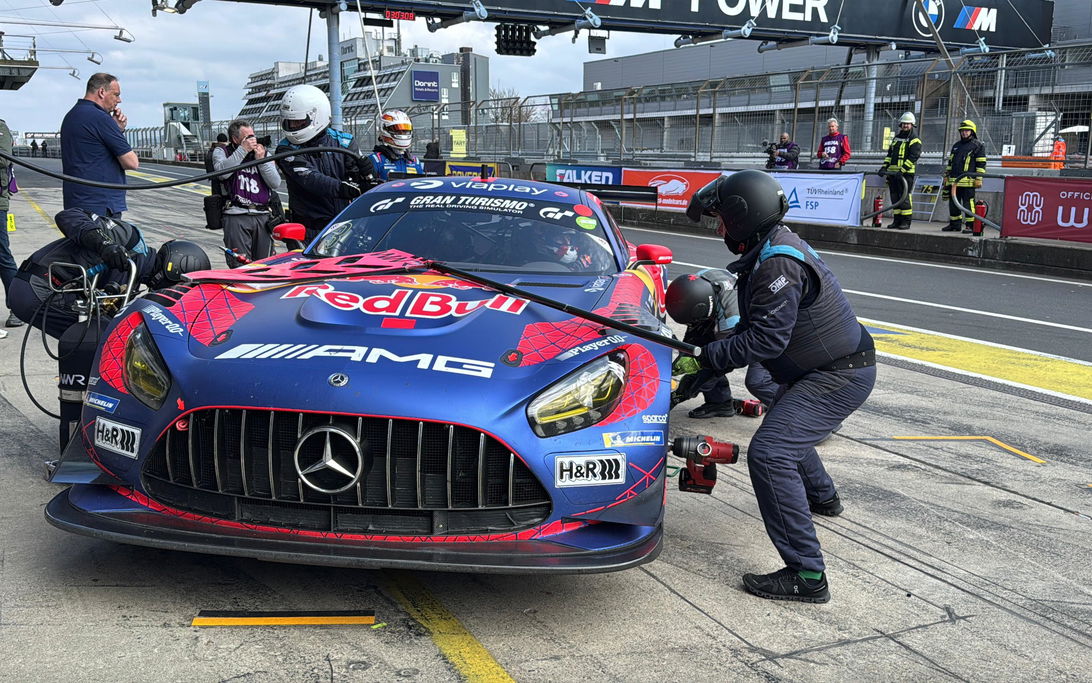
I was knee-deep in the 2004 season telemetry again, tracing the ghost of Michael Schumacher’s throttle application through the Hockenheim stadium section, when the alert came through. Another disqualification. Another post-race correction. My first thought wasn't about rules, but about the story the numbers refused to tell until it was too late. Max Verstappen’s Winward Racing team, having just conquered the Nürburgring 24h qualifying race, was stripped of victory for using seven sets of tires instead of the permitted six. A "huge beginner's mistake," Ralf Schumacher called it. The narrative writes itself: the precision king’s castle crumbling over a counting error. But the data analyst in me sees a different plot. This isn't just a blunder; it's a perfect, ugly data point in the creeping robotization of racing, where human oversight fails precisely because we're told to trust the system, not our gut.
The Illusion of Precision and the Ghost of 2004
Let's be brutally factual. On 2026-03-24, the car shared by Max Verstappen, Dani Juncadella, and Jules Gounon crossed the line first. Hours later, the result was void. The breach was elementary: six sets allowed, seven used. In the hyper-scripted world of modern F1, such an error feels prehistoric. We have algorithms predicting pit windows down to the millisecond, yet a team cannot count to seven.
"If Max Verstappen participates, you check everything two or even three times, and then you manage to count a set of tyres incorrectly... It's just as bad as that time when Ferrari was ready for a three-tire pit stop."
Schumacher’s podcast quote is the dagger. But it makes me think of Ferrari’s current scapegoat, Charles Leclerc. His "error-prone" label is cemented by strategic collapses he doesn't control—like a three-tire stop. Yet, my spreadsheets on his 2022-2023 qualifying laps show a metronomic consistency that is, frankly, Schumacher-esque. The raw pace data is there, buried under the narrative of operational chaos. Winward Racing’s tire miscount is that same species of error: a foundational, procedural meltdown that unfairly stains the driver’s brand. Verstappen’s reputation for relentless precision is collateral damage in a team's systemic failure. It highlights a terrifying truth: outside the cocoon of Red Bull's F1 operation, the scaffolding of excellence can be shockingly flimsy. This isn't about Verstappen's focus; it's about the ecosystem's fragility.
Data as Emotional Archaeology: What the Tire Sheets Reveal
Here’s where we dig. The article states the what, but my job is to excavate the why. Ralf Schumacher alleged, "They don't take it so seriously and seem to have other priorities than focusing on the essentials." This is a qualitative claim. But how do we quantify "not taking it seriously"?
- The Pressure Variable: Schumacher noted the heightened scrutiny with Verstappen present. This should have raised the operational heart rate, tightened protocols. The data point—one extra set—suggests the opposite occurred. Pressure doesn't just cause lock-ups; it causes administrative blindness. Did the focus on catering to a superstar's driving needs divert cognitive resources from the mundane logistics? The numbers imply yes.
- The Automation Paradox: We are racing toward a future where AI will call pit stops and manage tire allocations. This incident is a warning. An over-reliance on presumed systemic checks—someone else must have counted—creates gaps. In 2004, Ross Brawn and Michael Schumacher operated on a symbiosis of data and feel. The team had telemetry, but they also had a shared, visceral understanding of the car's heartbeat. Modern racing risks losing that. The Winward error is a human error, but it's the kind that flourishes in the twilight zone between full manual control and full automation, where accountability is diffuse.
- The Reputational Algorithm: For Verstappen, this is a data point in his personal brand's regression analysis. Every public failure is a statistical outlier that the media's algorithm uses to recalibrate his story. The "relentless precision" trend line just took a hit. For Winward Racing, the Schumacher criticism is a permanent stain in their credibility index, a hard data point for any future driver evaluating their team.
This fiasco is emotional archaeology. The single extra tire set is a fossil. When we analyze it, we uncover layers of pressure, misplaced trust in process, and the stark dissonance between a driver's elite standard and a team's operational culture. The lap times were perfect; the ledger was not. And in our data-obsessed sport, the ledger always wins.
Conclusion: The Sterile Future and the Uncounted Tire
So, what's next? The article predicts "more rigorous personal oversight" from Verstappen. That's the obvious fix. But the larger trend is more insidious. This incident will be used as a justification for further automation, for removing the "error-prone" human from the tire-counting equation entirely. We'll have a sensor on every wheel, an AI tracking every set. Problem solved.
But I fear that's how sterility wins. We'll eliminate the beginner's mistake and, in doing so, eliminate the very possibility of the human-touch genius that no algorithm can predict. We'll trade the occasional catastrophic miscount for a perpetual, predictable, and passionless execution. The sport becomes a spreadsheet that drives itself.
The story from the Nürburgring isn't that a champion's team can't count. It's that in our rush to data-fy every heartbeat of the sport, we're creating systems so complex that they fail on the simplest tasks. The untold story in those seven sets of tires is a dirge for intuition, a warning that before we hand the keys to the algorithms, we better be damn sure they know how to count. Michael Schumacher’s 2004 dominance was a symphony of man and machine in harmony. What we're building now feels more like a machine playing a man's part, and sometimes, forgetting the notes entirely.