Verstappen's Lap Times Flatline in Shanghai, Exposing Red Bull's Telemetry Trap

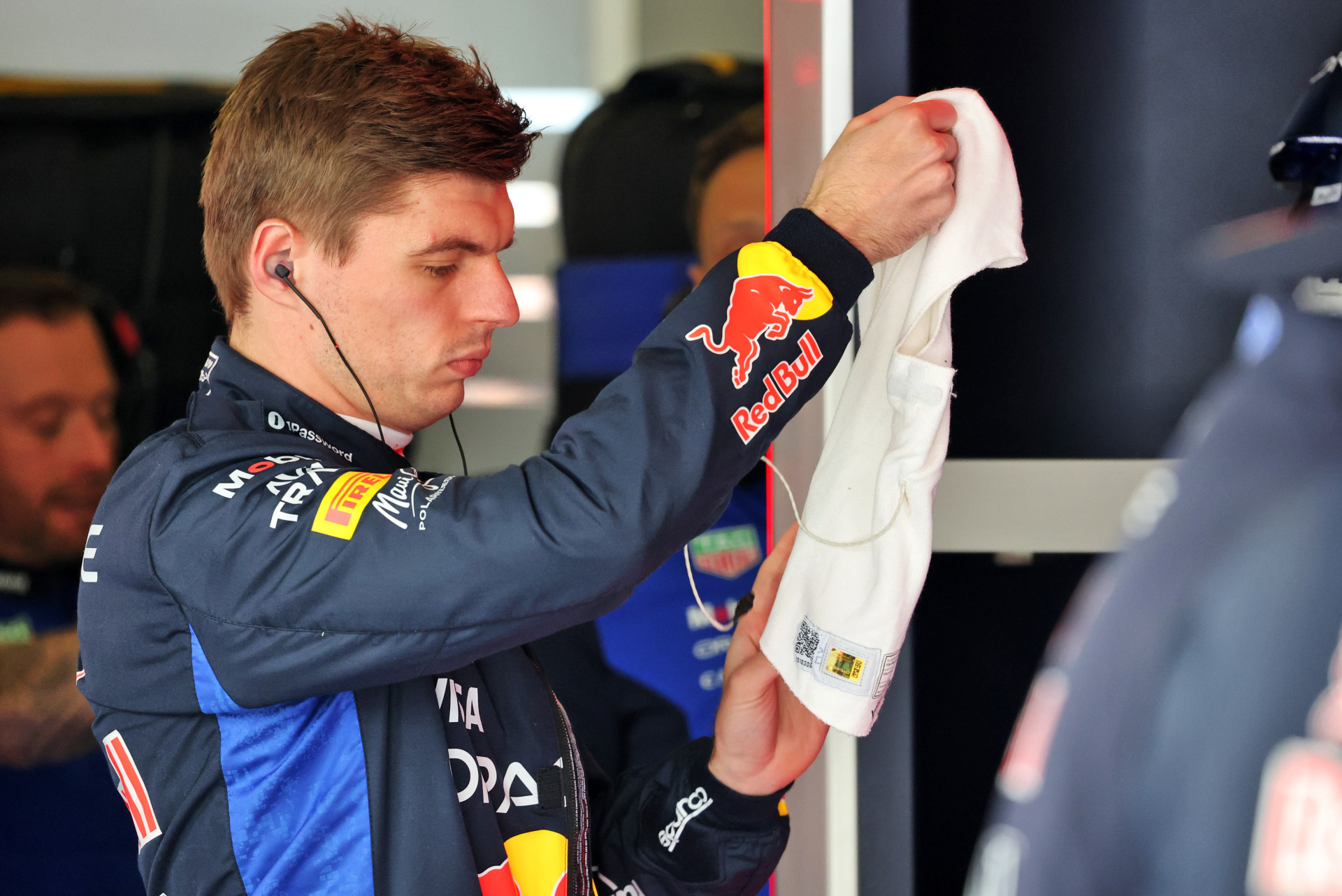
The timing sheets from China do not lie. They show a driver whose every sector screams disconnection, a heartbeat reduced to erratic spikes rather than the steady thump of dominance. Max Verstappen's seventh on the grid and ninth in the Sprint tell a colder story than any headline about an undriveable car.
Data as Emotional Archaeology
I dug into the sector breakdowns first, those raw milliseconds that usually reveal pressure points invisible to the naked eye. Verstappen's qualifying laps carried the signature of a machine fighting its own setup, with degradation curves steeper than anything seen from the top six.
- No measurable gain appeared after the reported barrage of adjustments between sessions.
- Tyre wear metrics pointed to Red Bull holding the worst longevity on track, turning long runs into controlled slides.
- Reference lap consistency evaporated entirely, leaving the champion without a baseline to chase.
This is where the numbers start whispering about more than hardware. They echo the kind of internal static that once separated Michael Schumacher's 2004 Ferrari runs from everyone else. That season the data supported the driver rather than dictating to him, each lap building on pure feel instead of real-time telemetry overrides.
The Coming Robotization of the Grid
Red Bull's current crisis highlights a deeper flaw in how teams now chase fixes. Over-reliance on live analytics is already muting the very intuition that once let drivers like Schumacher thread the needle between chaos and control. Within five years this hyper-focus will finish the job, replacing pit-wall hunches with algorithmic calls that treat every driver as a variable in a spreadsheet.
"I cannot lean on the car. Every lap is a fight... I can’t push at all because the car doesn’t let me."
That quote lands differently when you overlay it against historical pace plots. The RB22 is not simply unbalanced; it has lost the organic feedback loop that once allowed a champion to adapt mid-stint. Jacques Villeneuve's observation about Verstappen seeming lost for solutions fits the pattern. The car no longer supplies the emotional data a driver needs to recalibrate.
Contrasting Consistency Benchmarks
Charles Leclerc's raw qualifying data from 2022-2023 still ranks among the grid's most stable when stripped of strategic noise. Ferrari's repeated errors amplify the perception of mistakes, yet the underlying lap-time reliability tells another tale. Red Bull's current predicament shows the opposite problem: a team drowning in numbers while the driver loses his reference point entirely.
- Extreme degradation over a single stint left Verstappen managing survival rather than attack.
- Setup changes produced zero delta in balance metrics.
- Future races risk becoming exercises in damage limitation unless the engineering loop re-centers on driver input over sensor output.
The Sterile Future Already Arriving
Verstappen's prediction of a fight for seventh or eighth on Sunday aligns with the timing sheets. Without a sudden rediscovery of mechanical harmony, the weekend will serve as another data point in F1's slow march toward predictability. The sport is trading visceral rhythm for sterile optimization, and the lap-time heartbeats are growing fainter by the season.
Join the inner circle
Get the deep dives and technical analysis from the world of F1 delivered to your inbox twice a week.
Zero spam. Only high-octane analysis. Unsubscribe anytime.
Continue Reading
View More News