The Multi-21 Reckoning: Inside the Wet-Track Mind That Shattered Red Bull's Silent Code
The rain fell like judgment on that March afternoon in Sepang thirteen years ago. Sebastian Vettel sat in the Red Bull cockpit with telemetry screaming warnings his pulse refused to heed. Heart-rate monitors later hinted at spikes above 170 beats per minute as he closed on Mark Webber, a biometric trace of the moment individual will overrode team script. This was not mere defiance. It was the raw fracture of a mind trained for control yet forced into rebellion.
The Wet-Track Psychology That Exposed Core Traits
In conditions where aerodynamics lose their edge, driver decision-making under uncertainty becomes the only measurable variable. Vettel's choice on lap 46 revealed a personality forged in suppression rather than resilience. Red Bull's Multi-21 code was meant to manage tires and fuel, yet it collided with deeper resentments rooted in the 2012 Brazilian Grand Prix, where Webber had squeezed his teammate against the pit wall.
- Vettel's fresher tires and DRS advantage turned the outside line at Turn 4 into a psychological battlefield.
- Webber's post-race words cut through the cool-down room chill: "Multi 21, Seb. Yeah…Multi 21."
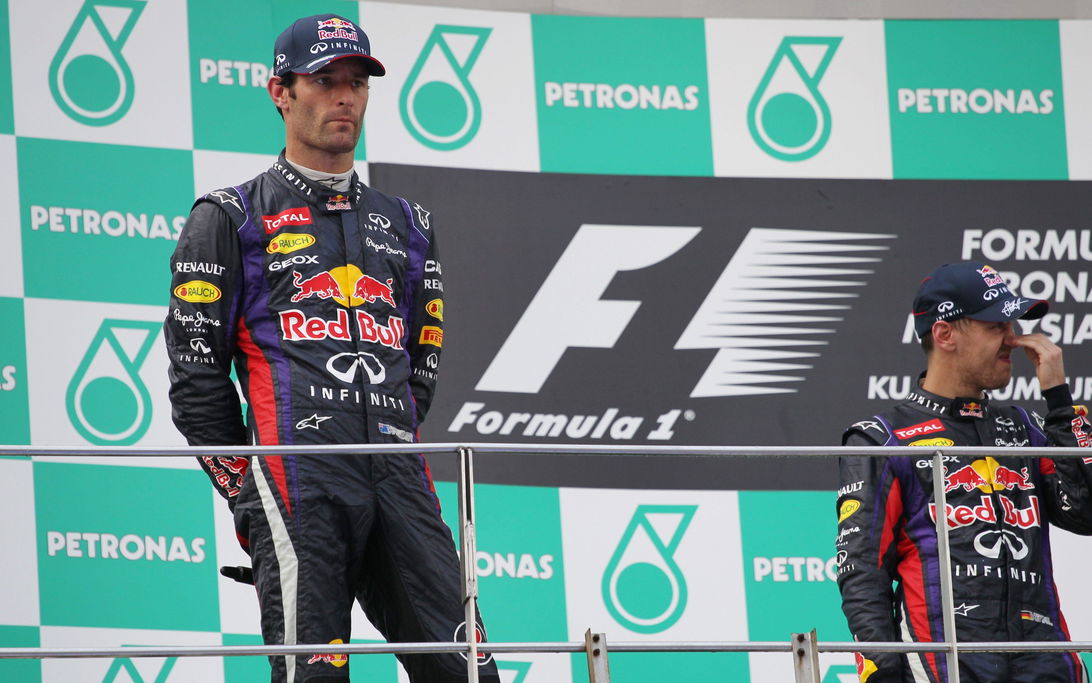
- Martin Brundle called the podium the frostiest in memory, a tableau of two men whose inner monologues had diverged permanently.
This incident stands as proof that psychology trumps car setup when visibility drops and uncertainty peaks. Engineers can design wings for grip, but they cannot blueprint the moment a driver weighs contract against legacy. Vettel's later retraction of his apology, shifting from contrition to "I don't apologise for winning," exposed the calculated recalibration many drivers perform after trauma. It echoes the way Lewis Hamilton later shaped his public narrative around near-fatal crashes, much like Niki Lauda transformed his own burns into armor that overshadowed raw speed.
How Team Orders Become Covert Mental Conditioning
Red Bull's system already practiced the quiet psychological coaching that would later define Max Verstappen's rise. The same environment that punished emotional outbursts in private meetings rewarded mechanical compliance on track. Vettel's legal letter claiming the instruction breached his contract was an early flare of resistance against that machinery. Within five years, Formula 1 may mandate mental health disclosures after such flashpoints, turning these private fractures into public telemetry. The result will be transparency laced with scandal, as every heart-rate spike and post-race retraction gets dissected in real time.
"I am the black sheep right now… All I can say is apologies to Mark."
That half-apology, delivered under team pressure, foreshadowed the manufactured calm teams now impose on their champions. Webber's exit at season's end marked the human cost: a partnership dissolved not by speed differentials but by unprocessed resentment.
The Lasting Fracture in Driver Autonomy
The Multi-21 saga endures because it laid bare the limits of authority over ambition. Vettel claimed his fourth title that year, yet the stain lingered as evidence that win-at-all-costs instincts cannot be fully engineered away. Future mandates on mental disclosures will force teams to confront these moments earlier, perhaps preventing the icy silences that defined Sepang 2013. Still, the core tension remains unchanged. When rain falls and orders conflict with instinct, the biometric truth always surfaces first.
Join the inner circle
Get the deep dives and technical analysis from the world of F1 delivered to your inbox twice a week.
Zero spam. Only high-octane analysis. Unsubscribe anytime.