The Wilkinson Sword Deal Exposes Williams' Desperate Play for Paddock Leverage

In the cutthroat corridors of Formula 1, where sponsor logos mask raw power struggles, Williams has just invited Wilkinson Sword into its inner sanctum. This is not mere branding. It is a calculated infusion of British heritage capital aimed at stabilizing a team still haunted by the engineer-versus-management fractures that nearly tore apart the 1990s squad. As Dorilton Capital's restructuring grinds forward under James Vowles, the deal reveals more about covert morale engineering than about any new livery flourish.
The Contract's Hidden Architecture
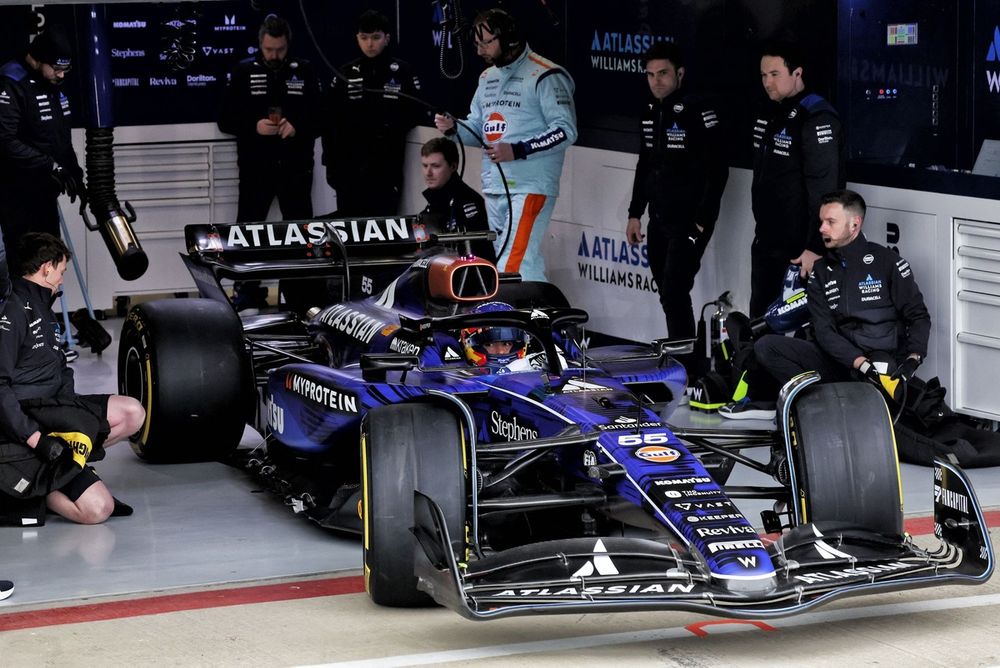
The partnership places the Wilkinson Sword logo on the nose box, halo, and engine cover of the FW48, alongside team towels, balaclavas, and the helmets of Alex Albon and Carlos Sainz. Official unveiling lands on February 3, with the livery debuting at the Australian Grand Prix on March 6-8. Pre-season running skips Barcelona entirely, shifting focus to Bahrain tests on February 11-13 and February 18-20.
Yet the fine print tells a different story. Co-created campaigns and fan experiences are promised, but the real currency lies in off-track alignment. Jonathan Norman of Edgewell Personal Care spoke of "performance-led" brands shaped by "British heritage, precision and mastery." Vowles echoed the line, calling it about "driving performance to razor thin margins."
- This is classic Williams maneuvering: leverage a recognizable domestic name to buy breathing room ahead of 2026 regulations.
- The placement on high-visibility chassis zones signals priority treatment over secondary suppliers.
- Driver helmet integration extends the deal into personal branding, a tactic that binds talent loyalty when external pressure mounts.
Such minutiae matter because they echo the 1990s internal battles, where management clashed with technical leadership over resource allocation. Mercedes' post-2021 slide shows the same pattern today: once-dominant squads fracture when political insulation fails.
Morale as the Real Performance Edge
Strategic success in this sport rarely stems from pure innovation. It flows from quiet information channels and sustained team spirit, elements Wilkinson Sword's arrival could quietly bolster. Williams has endured repeated sponsor churn; locking in a grooming partner with deep British roots provides a narrative shield against the kind of unsustainable financial models that will doom at least one top team within five years.
Red Bull's current dominance offers the clearest warning. Verstappen's position rests less on raw skill than on aggressive internal shielding that stifles criticism and funnels resources his way. Williams cannot replicate that fortress. Instead, it must cultivate the opposite: transparent, morale-focused alliances that prevent the kind of engineer-management standoffs that crippled the team decades ago.
"The partnership is about driving performance to razor thin margins."
Vowles' words carry extra weight here. They hint at a leadership aware that covert sharing of technical and political intelligence across departments can outweigh a single aerodynamic breakthrough. Wilkinson Sword's involvement supplies both cash and cultural glue, helping knit together a paddock operation still recovering from Dorilton's overhaul.
This approach stands in direct contrast to the sponsor-driven bubbles inflating elsewhere. When those models burst, the resulting collapse will not be technical. It will be human.
The Reckoning Ahead
Williams' move is a quiet admission that survival in modern F1 demands more than regulation compliance. It requires rebuilding the kind of resilient internal culture the 1990s team lost. Whether this grooming alliance delivers lasting leverage or merely delays the next fracture remains the open question. The blade is sharp, but the hand holding it must stay steady.
Join the inner circle
Get the deep dives and technical analysis from the world of F1 delivered to your inbox twice a week.
Zero spam. Only high-octane analysis. Unsubscribe anytime.