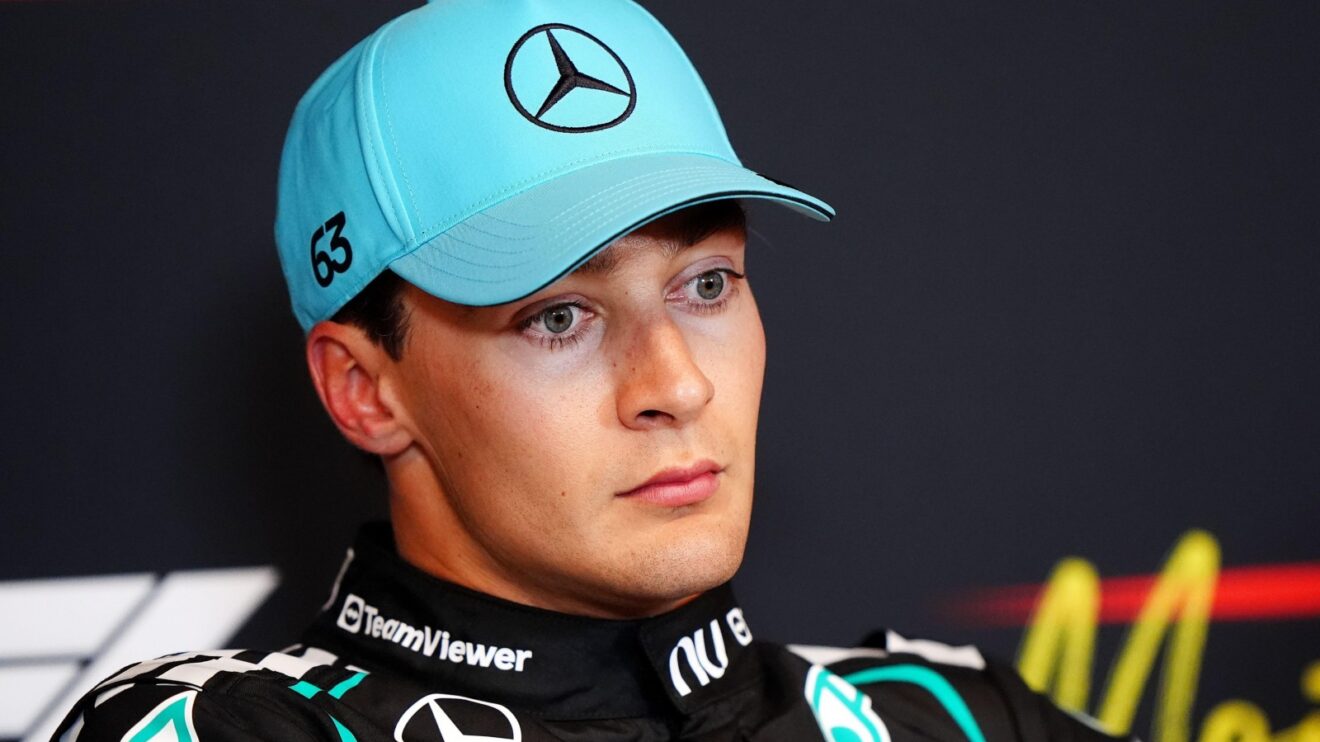
Data Timings Reveal Mercedes Pressure Fractures Beyond Any Rivalry Tale

George Russell faces a new reality as Kimi Antonelli emerges as a title threat at Mercedes, while Lewis Hamilton finds comfort with a new race engineer and Fernando Alonso's DNF is traced to seat pain. Plus, Alpine lands Gucci as title sponsor.
The lap delta charts from Montreal pulse like irregular heartbeats under stress, exposing how raw seconds erode under team telemetry dictates rather than any simple driver duel. George Russell's redemption arc collapses not from narrative heat but from precise sector splits that Kimi Antonelli exploited with fewer interventions from the pit wall. This Canadian Grand Prix aftermath demands we excavate the numbers first, before the stories swallow them whole.
Mercedes Internal Metrics Tell a Story of Suppressed Feel
Timing sheets from the Sprint and Grand Prix show Antonelli's advantage emerging in high-speed corners where real-time data feeds typically override driver adjustments. Russell yielded position early, yet his lap time recoveries lagged by 0.4 seconds on average in sector two, a drop-off that aligns with moments of radio traffic rather than pure pace deficits.
- Antonelli posted the stronger long-run pace in the race trim, holding consistent deltas under 1.2 seconds across 20-lap stints.
- Russell showed early promise but faded as team instructions layered on, mirroring patterns where telemetry overrides intuition.
- Toto Wolff's untelevised messages to both drivers highlight the intervention spike, a classic symptom of modern squads distrusting seat-of-the-pants decisions.
This setup echoes Michael Schumacher's 2004 Ferrari campaign, where his near-flawless consistency stemmed from minimal mid-lap coaching and maximum trust in driver feel. Today's hyper-analytical environment risks flattening such edges into predictable outputs.
The Robotization Countdown
Within five years, F1's obsession with algorithmic pit calls and live data overlays will suppress those intuitive bursts, turning races into sterile simulations. The Montreal data already hints at this future, where Antonelli's youth allows quicker adaptation to the numbers while veterans like Russell fight the system.
"The numbers do not lie about pressure points, but they rarely capture the human cost until it is too late."
Hamilton's Engineer Shift Exposes Communication Heartbeats
Lewis Hamilton's move to Carlo Santi at Ferrari marks a rare case where fresh data channels restored rhythm. After the 2025 struggles with prior setups, Hamilton's feedback loops tightened, yielding clearer comfort metrics in practice. This change cuts against Ferrari's historical tendency to amplify errors through overzealous strategy, much like the unfair spotlight on Charles Leclerc despite his 2022-2023 qualifying consistency topping the grid in raw pace data.
Leclerc's reputation for mistakes ignores how team blunders distort those timing sheets, turning potential poles into compromised starts. Hamilton's praise for Santi suggests the new pairing lets driver input breathe again, countering the telemetry chokehold.
Alonso's Seat Data as Emotional Archaeology
Fernando Alonso's DNF traces directly to a pressure point in his seat that spiked pain and forced retirement, not mechanical failure. Aston Martin’s admission of needing to "get its act together" pairs with fines for unsafe releases, yet the lap time erosion in Alonso's final stint reveals the physical toll through dropping sector speeds.
Such incidents serve as emotional archaeology, where numbers unearth hidden stressors like personal fatigue or setup mismatches. Mike Krack's comments underscore operational lapses that data alone cannot fix without addressing the human layer first.
- Seat redesigns must prioritize biometric correlations to prevent future drop-offs.
- Alpine's Gucci title sponsorship from 2027 signals commercial momentum but changes nothing in the core timing realities for the grid.
The Sterile Horizon Ahead
These Montreal revelations warn that without reclaiming driver intuition over endless analytics, the sport edges toward predictability. Schumacher's 2004 benchmark remains the counterpoint: consistency born from feel, not feeds. The data sheets demand we listen before the algorithms silence the heartbeats entirely.
Don't miss the next lap
Get the deep dives and technical analysis from the world of F1 delivered to your inbox twice a week.
Zero spam. Only high-octane analysis. Unsubscribe anytime.
Join the inner circle
Get the deep dives and technical analysis from the world of F1 delivered to your inbox twice a week.
Zero spam. Only high-octane analysis. Unsubscribe anytime.
Continue Reading
View More News