Ferrari's 'Macarena' Rear Wing Could Debut in China
Ferrari may race its radical 'Macarena' rear wing at the Chinese GP, a movable 180-degree design aimed at cutting drag. Its potential debut during a Sprint weekend—with limited testing—highlights Ferrari's aggressive technical push and could shake up the early-season competitive order if successful.
Ferrari has reportedly brought its experimental 'Macarena' rear wing to the Chinese Grand Prix, potentially setting the stage for its competitive debut. The innovative 180-degree rotating component, which caused a stir during winter testing but was absent in Australia, could be tested during the challenging Sprint weekend in Shanghai.
Why it matters:
The introduction of such a radical aerodynamic concept during a Sprint event—where practice time is severely limited—signals Ferrari's aggressive push for performance and willingness to take technical risks early in the season. If successful, this movable wing could provide a tangible drag reduction advantage on Shanghai's long straights, directly impacting race results and setting a development benchmark for rival teams.
The Details:
- The component, internally nicknamed the "Macarena" wing by Team Principal Fred Vasseur, features a top element that can rotate 180 degrees around its axis.
- Its primary function is active aerodynamic adjustment: the element can briefly turn to a position almost perpendicular to the airflow to drastically reduce drag on straights before returning to its standard angle for downforce in corners.
- Experts suggest this design may offer a greater drag reduction effect than the conventional rear wing solutions used by competitors, potentially exploiting a small but valuable loophole within the FIA's tight regulations.
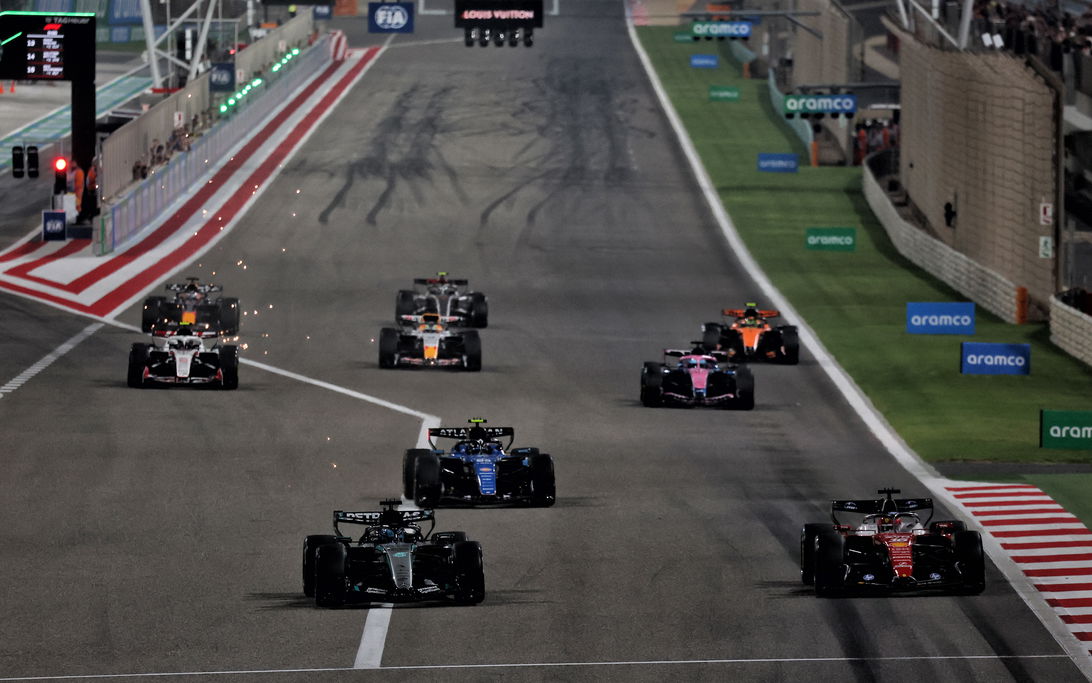
- Lewis Hamilton tested the prototype for a handful of laps during pre-season testing in Bahrain.
- Ferrari arrives in China with confidence after a strong showing in Melbourne, where the SF-24 demonstrated promising race pace, resulting in a podium for Charles Leclerc.
What's next:
Whether the wing will actually be raced remains a strategic gamble. The Shanghai weekend presents a high-risk, high-reward scenario.
- With only one practice session before Sprint qualifying, the team has minimal time to validate the component's reliability and performance under real conditions.
- If Ferrari chooses to run it, the China GP could become a significant technical battleground early in the 2026 season. A successful debut would validate Ferrari's innovative approach and put immediate pressure on rivals like Red Bull and Mercedes.
- Conversely, a failure or lack of performance could cost valuable points in a tight championship fight, making the decision to deploy the 'Macarena' wing one of the weekend's most critical calls.
Don't miss the next lap
Get the deep dives and technical analysis from the world of F1 delivered to your inbox twice a week.
Zero spam. Only high-octane analysis. Unsubscribe anytime.
Join the inner circle
Get the deep dives and technical analysis from the world of F1 delivered to your inbox twice a week.
Zero spam. Only high-octane analysis. Unsubscribe anytime.
Continue Reading
View More News