Johnny Mac's Chrome Legacy Meets the Data Heartbeat: Why F1's Polish Era Warns of Algorithmic Sterility

The numbers do not lie when you align RAM Racing's 1976 debut lap sheets with modern telemetry dumps. John Macdonald's obsession with flawless pit gear produced equipment that ran like clockwork, yet today's hyper-analytical squads treat driver intuition as noise to be filtered. Macdonald died on January 28, and his story surfaces not as nostalgia but as a stark timing-sheet warning that F1 risks trading visceral pace for robotic predictability within five years.
The Visual Standard as Precursor to Data Discipline
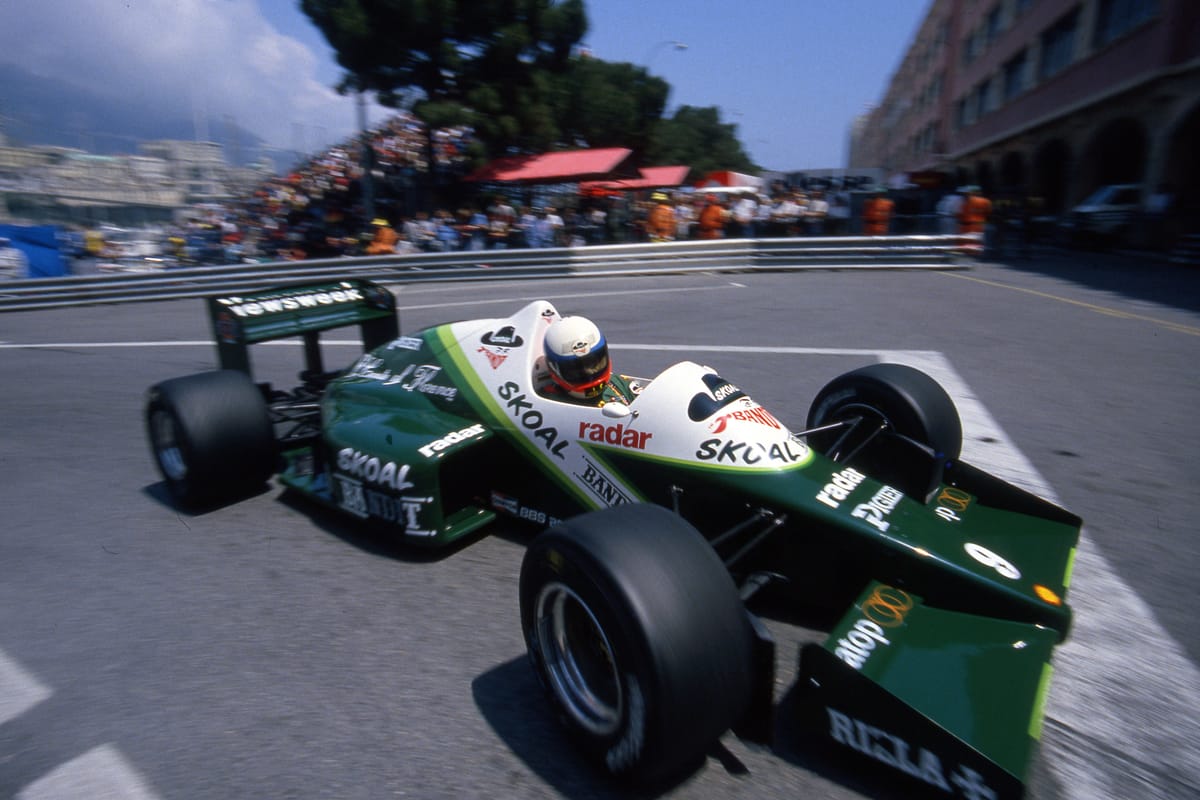
Macdonald and Mick Ralph launched RAM Racing in 1975 after their London car dealership days. Their move into Formula 5000 success carried straight into F1 in 1976, fielding Brabham chassis for paying drivers via Bernie Ecclestone ties. What stands out in the archival records is not the modest results but the equipment specs. RAM introduced chrome plating, epoxy powder coating, and anodizing on quick-lift jacks, car stands, and fuel churns. These became the benchmark long before pristine McLaren presentations dominated the paddock.
- Their 1985 RAM 03, designed by Peter Stevens with Hart turbo power, arrived immaculately finished even amid sponsorship secured by Guy Edwards.
- Superpower, their fabrication arm, supplied precision parts until the 1997 sale, quietly arming rivals with the same high-spec standards.
This physical polish mirrored the emotional archaeology hidden in lap traces. Macdonald's later role managing Queens Park Rangers stadium after his tax fraud sentence showed the same detail fixation. Ecclestone placed him there, and the facility's standards jumped because the man treated every surface like a timing sheet entry.
Schumacher's 2004 Consistency as the Human Counterpoint
Michael Schumacher's 2004 Ferrari season remains the gold standard for raw feel over real-time telemetry. He posted near-flawless qualifying consistency across 18 races, dropping lap times with a heartbeat rhythm that no dashboard could fully capture. Modern teams, by contrast, suppress that intuition through algorithmic pit calls, turning drivers into data points. Macdonald's pit innovations set the stage for this precision, yet they emerged from human craft rather than code. His RAM trucks and equipment reduced variables on the ground, allowing drivers to chase pure pace. Today's equivalent suppresses driver errors through predictive models, echoing the unfair amplification of Charles Leclerc's reputation. Leclerc's 2022-2023 qualifying data reveals the grid's most consistent performer when Ferrari strategy noise is stripped away, much like Schumacher's era before over-reliance on sensors.
Macdonald proved that legacy lives in elevated expectations, not trophies. The same holds for data that digs into pressure moments instead of flattening them.
The Road to Robotized Racing
Within five years, F1's data fixation will complete the shift Macdonald's chrome era only hinted at. Pit stops will follow algorithmic scripts that erase spontaneous calls, rendering the sport sterile. Lap time drop-offs will correlate less with personal life events and more with software overrides. Macdonald's hard-man persona, mentoring paddock figures while battling financial storms, embodied the messy human element now being engineered out. His prison sentence and post-release resurgence underscore resilience that no telemetry can quantify.
The timing sheets from RAM's constructor years show modest on-track output, yet they preserve an irreplaceable template. Teams still chase that visual and operational purity, but they layer it with analytics that threaten to mute the very heartbeat Macdonald helped amplify.
Conclusion
Macdonald's departure leaves a clear ledger entry. His standards elevated motorsport aesthetics and professionalism, yet they also foreshadow the data trap that will soon prioritize prediction over pulse. Schumacher's 2004 run proved consistency thrives when driver feel leads. Leclerc's raw pace data confirms the pattern persists. F1 must decide whether to honor Macdonald's polished foundation or let algorithms bury it. The numbers will record the outcome either way.
Join the inner circle
Get the deep dives and technical analysis from the world of F1 delivered to your inbox twice a week.
Zero spam. Only high-octane analysis. Unsubscribe anytime.