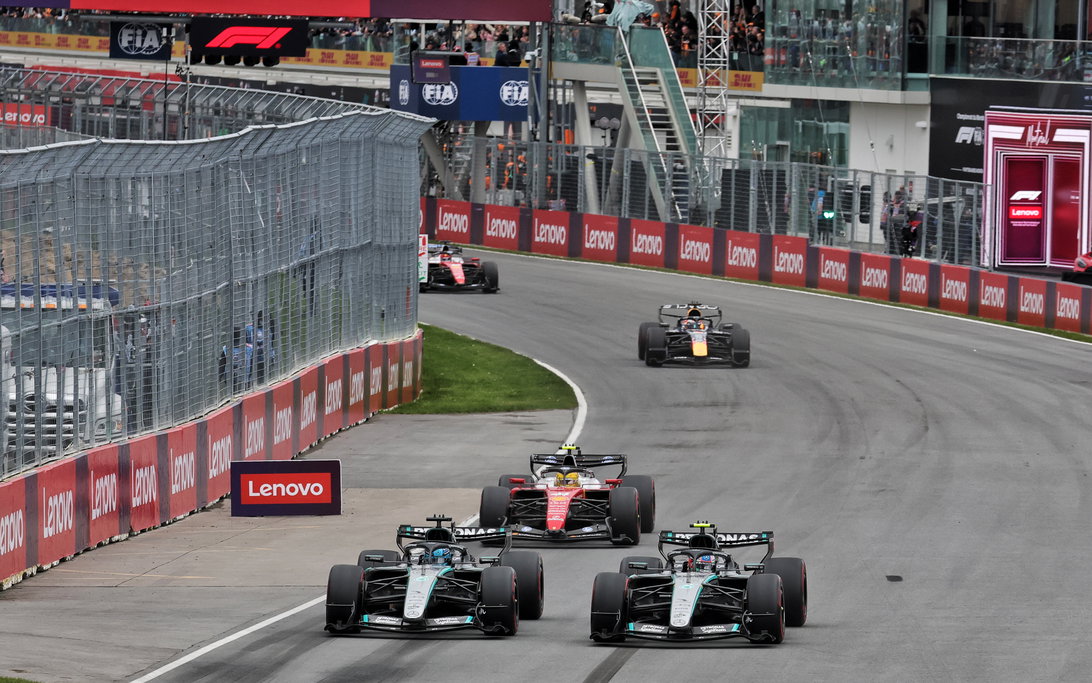
George Russell Uses Kimi Antonelli Scrap to Defend F1's Current Power Units
George Russell argues that the intense wheel-to-wheel battle with teammate Kimi Antonelli at the Canadian Grand Prix proves the current F1 power units are delivering exciting racing, rejecting calls for major changes.
George Russell has pushed back against growing criticism of Formula 1's current power units, pointing to his thrilling on-track battle with Mercedes teammate Kimi Antonelli at the Canadian Grand Prix as evidence that the regulations are working. The duo swapped positions multiple times before a power unit failure forced Russell out, but the Briton insists the new engines enable close racing unseen since the early hybrid era.
Why it matters:
With some F1 figures calling for a shift toward a 60/40 split between combustion and battery output as early as next year, Russell's defense highlights a key divide. The current power units rely heavily on battery deployment, which has drawn complaints that it compromises wheel-to-wheel racing. However, Russell argues the opposite—that the technology is precisely what allowed him and Antonelli to race so closely in Montreal.
The details:
- Russell described the battle as the best he's had in years, comparing it to the iconic 2014 Bahrain duel between Lewis Hamilton and Nico Rosberg.
- He noted that the early rounds in Melbourne and China also featured strong battles, all made possible by the current power unit characteristics.
- The proposed 60/40 split, which would increase combustion engine output, has already been cast into doubt, with no consensus on the direction.
- Meanwhile, Russell's retirement in Canada cost him valuable championship ground. He now sits 43 points behind Antonelli in the standings.
The big picture:
The debate over power unit regulations goes beyond sheer performance. As F1 navigates its hybrid era, the balance between spectacle and technological relevance remains a central tension. Russell's comments suggest that at least some drivers see the current formula as a positive step for racing. Whether the sport listens or pushes forward with changes will shape the competitive dynamics for the remainder of the season and beyond.
Don't miss the next lap
Get the deep dives and technical analysis from the world of F1 delivered to your inbox twice a week.
Zero spam. Only high-octane analysis. Unsubscribe anytime.
Join the inner circle
Get the deep dives and technical analysis from the world of F1 delivered to your inbox twice a week.
Zero spam. Only high-octane analysis. Unsubscribe anytime.