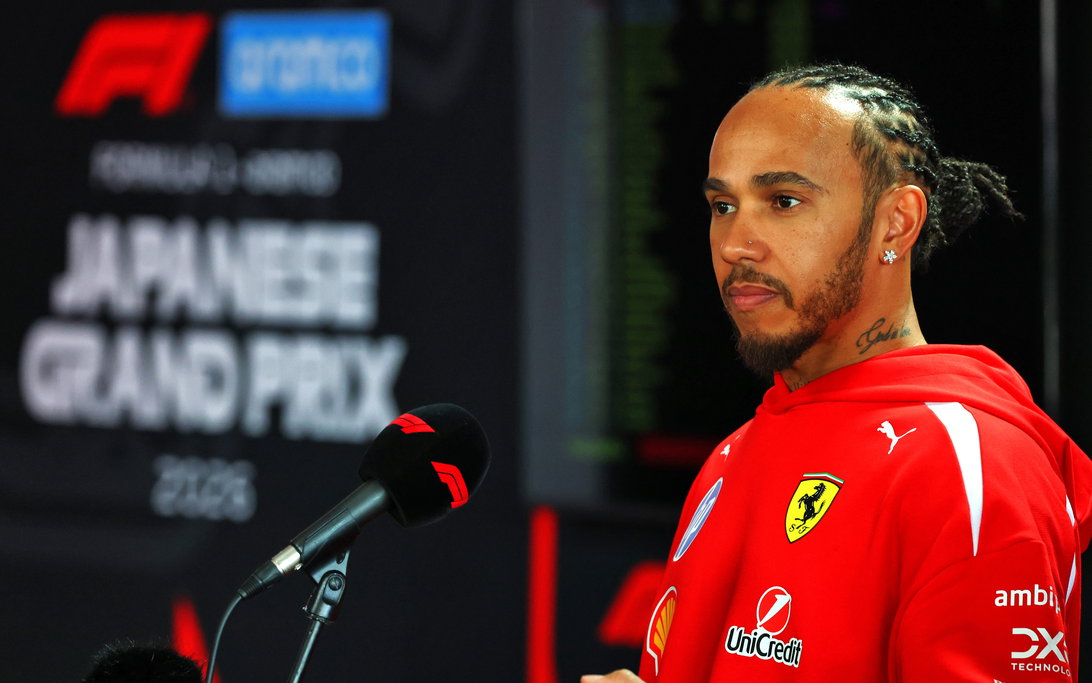
Hamilton cleared of impeding after Verstappen's testimony proves key
Lewis Hamilton avoided a penalty after being investigated for allegedly impeding Max Verstappen in Japanese GP practice. Stewards dismissed the case after reviewing footage and considering Verstappen's own testimony that he did not find the situation dangerous, highlighting the role of driver feedback in officiating decisions.
Lewis Hamilton was cleared of an impeding investigation during Japanese Grand Prix practice after stewards reviewed video evidence and considered testimony from Max Verstappen, who stated the situation was not dangerous from his perspective. The incident occurred as the rivals approached the high-speed 130R corner, with Hamilton's Ferrari noted for potentially driving unnecessarily slowly. The stewards' decision highlights the weight given to driver feedback in such marginal cases.
Why it matters:
In a sport defined by intense rivalry, Verstappen's objective assessment helped avoid a potential penalty for Hamilton, underscoring the importance of driver testimony in stewards' deliberations. This collaborative element, even between competitors, is crucial for fair and consistent application of the rules, especially during practice sessions where track position and preparation are paramount.
The details:
- The incident was investigated under the rule prohibiting driving "unnecessarily slowly, erratically, or in a manner that is potentially dangerous."
- Onboard footage showed Hamilton in the middle of the track between Turns 14 and 15, initially moving left before staying right as Verstappen approached at high speed.
- Key Testimony: Through his team representative, Verstappen told the stewards he did not consider the situation dangerous from his cockpit.
- Stewards' Findings: Officials concluded that while Verstappen was "momentarily influenced" by Hamilton's position, he was not forced to brake, lift, or deviate from his racing line to avoid the Ferrari.
- The decision was consistent with precedents for impeding incidents in practice that are not deemed dangerous.
What's next:
With the matter closed, both drivers can focus fully on the remainder of the Japanese Grand Prix weekend. The ruling sets a clear precedent for similar incidents, emphasizing that driver perspective and the lack of required evasive action are critical factors in practice session impeding investigations.
Don't miss the next lap
Get the deep dives and technical analysis from the world of F1 delivered to your inbox twice a week.
Zero spam. Only high-octane analysis. Unsubscribe anytime.
Join the inner circle
Get the deep dives and technical analysis from the world of F1 delivered to your inbox twice a week.
Zero spam. Only high-octane analysis. Unsubscribe anytime.
Continue Reading
View More News