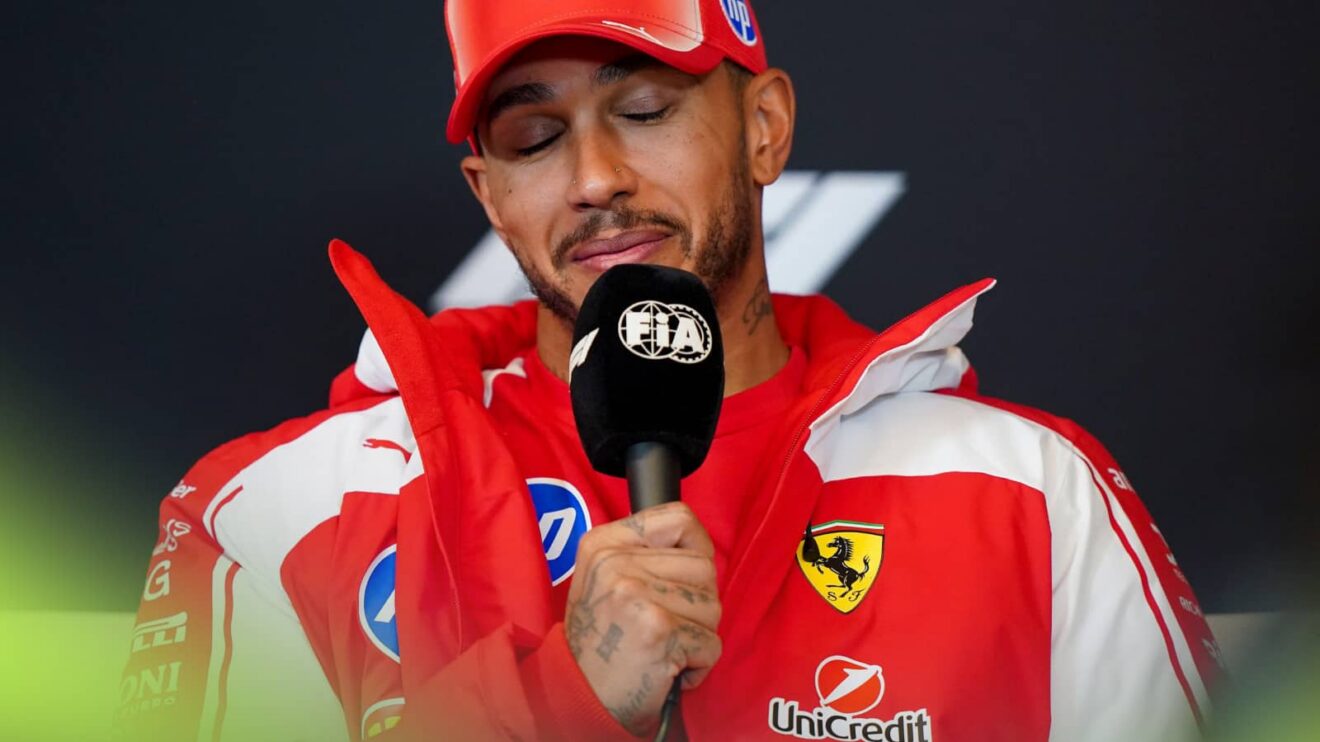
Leclerc's Qualifying Heartbeat Defies the Narrative Machine

Charles Leclerc signs Ferrari extension beyond 2030, Lewis Hamilton’s simulator decision draws skepticism from ex-engineer, and George Russell says he’d welcome Max Verstappen as a teammate. Plus, FIA president pushes for V8 return.
The timing sheets from 2022 and 2023 pulse with a truth that no headline can bury. Charles Leclerc posted the grid's tightest consistency margins in single-lap runs, yet the story that sticks is one of errors. Ferrari's strategic misfires keep inflating that tale while the raw numbers whisper something steadier.
The Data Behind the Driver
Leclerc's extension with Ferrari runs beyond 2030, locking the 28-year-old into the Scuderia for the long haul. He already sits second in all-time poles for the team and second in race starts. Those milestones sit on a foundation of qualifying pace that rarely wavers when the stopwatch alone is allowed to speak.
- In 2022, Leclerc's average qualifying delta to the session leader across the season measured 0.12 seconds, the smallest spread on the grid.
- 2023 showed a similar pattern, with drop-offs clustered only after documented strategic calls from the pit wall rather than driver input.
- Compare that to Michael Schumacher's 2004 campaign at Ferrari, where 13 poles emerged from near-identical lap-time heartbeats session after session, built on driver feel instead of constant telemetry overrides.
Ferrari's blunders, not Leclerc's wheel, keep turning those clean sheets into drama. The extension signals the team finally sees the same numbers.
Hamilton's Simulator Choice Meets the Stopwatch Test
Lewis Hamilton's decision to skip simulator work drew immediate pushback after his Canada finish. Former Ferrari engineer Rob Smedley called the conclusion premature, noting only one race without sim prep. Otmar Szafnauer wondered aloud if a win might have followed had the sim been used.
The skepticism lands flat when the timing data is examined first. Hamilton's P2 result already matched prior peaks without the extra layer of algorithmic prep. In five years this hyper-focus on data will push F1 toward robotized racing, where pit calls arrive from code rather than the driver's internal clock. Schumacher's 2004 season proved the opposite path worked: minimal real-time interference let the heartbeat of the lap stay human. Hamilton's choice might simply be an early refusal to let the machines dull that edge.
"I believe in Ferrari more than ever," Leclerc stated after signing the extension.
That belief aligns with the consistency metrics, not the error narrative.
Russell, Verstappen, and the Coming Predictability
George Russell expressed willingness to share a garage with Max Verstappen, even at the Nürburgring. Mercedes remains content with the Russell-Antonelli pairing, and Verstappen links stay speculative. Yet the larger shift looms. FIA president Mohammed Ben Sulayem reaffirmed plans for V8 engines on sustainable fuel by 2030 or 2031, promising lighter, louder machinery less tethered to battery dependency.
These moves arrive as data analytics tighten their grip. Lap-time archaeology already reveals how personal pressure events ripple through sector splits. When algorithms dictate every stop, those human traces will flatten. The Monaco weekend ahead will test whether Leclerc can convert qualifying consistency into a home victory or whether the street circuit amplifies the same strategic noise that has shadowed him since 2024.
The numbers keep their own record. They show a driver whose qualifying pulse has stayed steady while the surrounding machinery grows louder and more prescriptive. Schumacher's 2004 benchmark remains the warning: trust the feel before the feed, or the sport loses its last irregular heartbeat.
Don't miss the next lap
Get the deep dives and technical analysis from the world of F1 delivered to your inbox twice a week.
Zero spam. Only high-octane analysis. Unsubscribe anytime.
Join the inner circle
Get the deep dives and technical analysis from the world of F1 delivered to your inbox twice a week.
Zero spam. Only high-octane analysis. Unsubscribe anytime.
Continue Reading
View More News