Mercedes' 'unacceptable' F1 start problem persists
Mercedes faces intense scrutiny over its repeated failure to execute clean race starts from pole position in 2024, with team boss Toto Wolff calling the situation 'unacceptable.' The issue, a blend of technical calibration and driver execution, forces the team into unnecessary recovery drives, jeopardizing its championship campaign.
Mercedes has failed to convert a single pole position into a first-corner lead this season, with poor starts becoming a recurring and costly weakness. Team Principal Toto Wolff has labeled the issue "unacceptable," as drivers Kimi Antonelli and George Russell repeatedly lose places off the line despite the car's race-winning pace.
Why it matters:
In a tightly contested season where overtaking can be difficult, surrendering track position at the start forces Mercedes to rely on recovery drives, which is a risky and inefficient strategy. As car development progresses and field spread potentially increases, the ability to fight back from lost positions may diminish, making clean getaways critical for securing victories and the championship.
The details:
- The problem is a consistent theme, but the root causes have varied from race to race, pointing to a complex combination of technical and operational factors.
- Technical & Strategic Missteps: Issues have included hitting battery recharge limits in Australia, incorrect energy management strategies in China, and problems with clutch release and trail braking software in Japan.
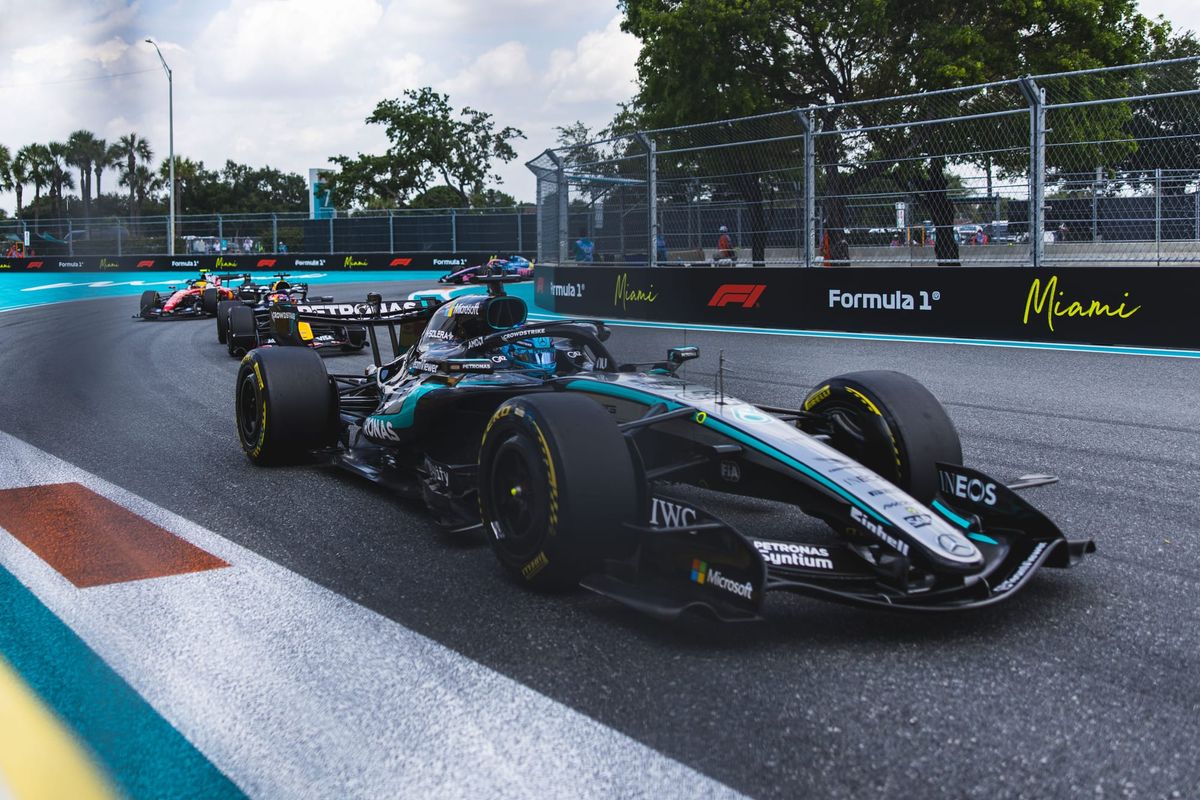
- The Miami Example: In Miami, the core issue was a data gap. The team set a clutch release target for Antonelli based on grip estimates from practice starts done only on the clean side of the grid.
- Antonelli started the Sprint from the dirtier side, and a PU problem prevented him from completing practice starts after final practice, leaving the team with imperfect information.
- The resulting target was too ambitious for the actual grip level, causing wheelspin and a poor launch.
- Shared Responsibility: Wolff has taken responsibility for the team not providing the drivers with the right "tool," while Antonelli has admitted to his own inconsistencies and lack of confidence with the clutch drop procedure.
What's next:
Mercedes acknowledges it must "dig even deeper" to solve the problem. The team is focused on improving its pre-race data modeling and grip prediction algorithms, while Antonelli is working on building more consistent muscle memory for his starts. Resolving this operational flaw is a top priority, as future success may depend on converting pole positions into race leads, not just recovering from mistakes.
Don't miss the next lap
Get the deep dives and technical analysis from the world of F1 delivered to your inbox twice a week.
Zero spam. Only high-octane analysis. Unsubscribe anytime.
Join the inner circle
Get the deep dives and technical analysis from the world of F1 delivered to your inbox twice a week.
Zero spam. Only high-octane analysis. Unsubscribe anytime.
Continue Reading
View More News