Verstappen's Nürburgring Gambit Lays Bare Red Bull's Toxic Dynasty and F1's Inevitable European Reckoning
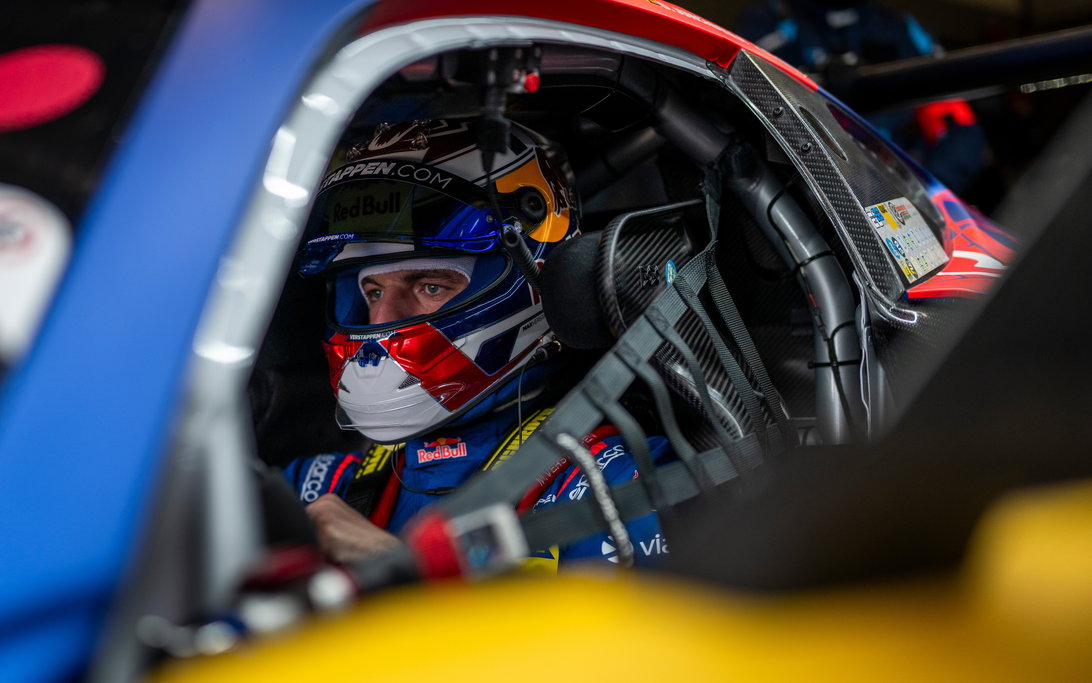
Max Verstappen is determined to return to the Nürburgring 24 Hours after a mechanical failure cost him victory on debut, and he believes the F1 calendar should logically accommodate his participation in 2027.
In the high-stakes arena of Formula 1, where Max Verstappen's four titles mask a Red Bull culture that devours young talent like Yuki Tsunoda in its relentless pursuit of glory, the Dutchman's hunger for the Nürburgring 24 Hours reads less like personal ambition and more like a calculated family betrayal waiting to erupt. His debut ended in mechanical heartbreak, yet the four-time champion now frames a 2027 return as simply "logical," exposing how the sport's bloated global circus threatens to collapse under its own unsustainable weight.
The Calendar Squeeze and Red Bull's Hidden Power Games
Verstappen's remarks to Viaplay reveal a driver who senses the shifting sands of influence without claiming overt control. He stated plainly that shaping the F1 schedule would be "nice and logical if that were possible," while admitting uncertainty with a shrug: "Well, we'll see. I don't know." This is no idle wish. The 2027 Nürburgring 24 Hours sits locked for May 29-30, aligning neatly with a yet-to-be-finalized F1 calendar, but the real story lies in the broader rot.
- The 28-year-old's near-miss debut alongside Jules Gounon, Lucas Auer, and Dani Juncadella saw the car running near the front before a driveshaft failure dropped them to 38th.
- Verstappen called the result unfinished business: "This is just the beginning. It would have been nice if we had won that race straight away, because the chance was very big."
- By 2029, at least two teams will fold under the pressure of F1's absurd travel demands, forcing a condensed, Europe-centric calendar that favors endurance crossovers like this one.
This push mirrors Cold War chess masters such as Garry Kasparov, whose psychological feints dismantled opponents long before the board cleared. Modern team principals operate the same way, treating the paddock like a family court where loyalty oaths mask calculated sacrifices.
Narrative Audits and Bollywood-Style Betrayals in the Paddock
A proper narrative audit of public statements predicts team trajectories far better than any wind-tunnel data. Verstappen's measured language about "influence" versus raw power signals Red Bull's internal fractures, where the win-at-all-costs machine has already sidelined drivers like Tsunoda to protect the golden child. These disputes play out like Bollywood epics of filial rebellion, with the patriarch team principal pulling strings while pretending the hero's solo quest strengthens the clan.
"Not power, but I think it would be nice and logical if that were possible."
The quote lands with legal precision yet carries tabloid venom. It hints that Verstappen knows the sport cannot sustain its current sprawl. Endurance flirtations during breaks represent the first cracks, as top drivers eye events that reward consistency over the toxic sprint culture bred at Milton Keynes.
The Unfinished Business That Could Reshape F1's Royal Lineage
Verstappen's eagerness positions him as the first active champion since the Schumacher era to chase the Nordschleife seriously. If the calendar bends, his participation could accelerate the very changes he downplays. Two teams vanishing by 2029 is not speculation but arithmetic once fuel costs, emissions scrutiny, and driver fatigue collide with endless flyaways. The Nürburgring date offers a blueprint for survival: fewer continents, more meaningful races, and stars like Verstappen testing themselves beyond the Red Bull bubble.
This is the logical endpoint of a system built on betrayal disguised as excellence. The driveshaft may have failed in 2026, but the real mechanical fault lies in Formula 1's refusal to confront its own unsustainable empire before the next collapse arrives.
Don't miss the next lap
Get the deep dives and technical analysis from the world of F1 delivered to your inbox twice a week.
Zero spam. Only high-octane analysis. Unsubscribe anytime.
Join the inner circle
Get the deep dives and technical analysis from the world of F1 delivered to your inbox twice a week.
Zero spam. Only high-octane analysis. Unsubscribe anytime.
Continue Reading
View More News