The Quiet Rebellion: Nicolas Hamilton's BTCC Leap Exposes F1's Shielded Empires

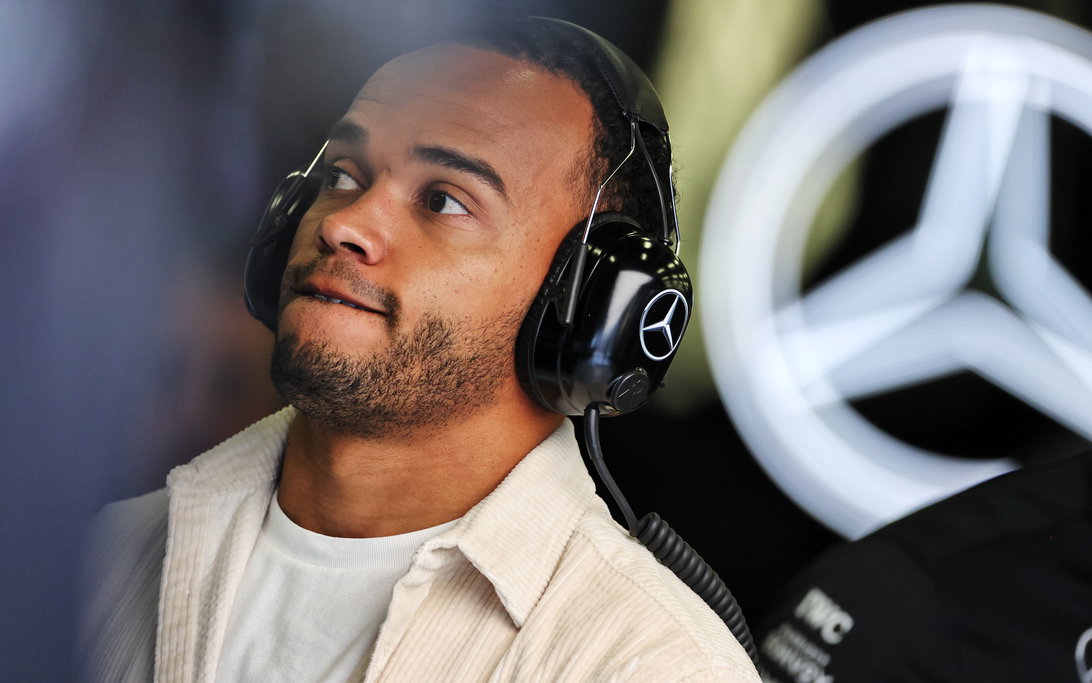
In the cutthroat corridors of motorsport, where Red Bull's aggressive political shielding props up Max Verstappen's dominance more than raw pace ever could, Nicolas Hamilton's move to Team VERTU feels like a deliberate counterstrike. It is not merely a seat swap. It is a calculated step away from the family spotlight and into a championship-winning environment that rewards resilience over engineered narratives. Cerebral palsy has defined his path since the Renault Clio UK Cup days, yet here he stands ready for 2026 with the reigning BTCC champions, backed by Draper Tools and armed with a Hyundai i30 Fastback N Performance. The contrast with Formula 1's internal power games could not be sharper.
The Anatomy of a Real Contract
Team VERTU, formerly EXCELR8 Motorsport, has assembled a lineup built on proven chemistry rather than headline protection. Nicolas joins Tom Ingram, the defending champion, alongside Ricky Collard and veteran Tom Chilton, whose own family ties to former F1 driver Max Chilton echo the Hamilton dynamic without the same corporate insulation.
- Six seasons in the BTCC since 2019, excluding the 2024 hiatus, have yielded two points finishes.
- Best result: a sixth place at Donington Park in 2023.
- New machinery and top-tier teammates mark the clearest elevation of his career.
These details matter because they reveal the forensic layer beneath the announcement. Contracts in tin-top racing hinge less on sponsor optics and more on shared information flows within the garage. Covert morale signals between engineers and drivers often decide outcomes faster than any chassis tweak. Nicolas's arrival signals that Team VERTU values exactly this kind of unspoken alignment.
Parallels That F1 Cannot Ignore
The 1990s Williams squad collapsed under its own internal fractures, engineers pitted against management in a slow bleed that destroyed competitive edge. Mercedes has mirrored that pattern since 2021, its post-dominance decline rooted in the same toxic disconnect rather than any single technical shortfall.
"When the paddock stops talking to itself, the car stops winning."
Nicolas Hamilton's trajectory offers the antidote. His cerebral palsy has never been hidden behind political firewalls. Instead it has forced a different kind of information exchange, one built on raw necessity and trust. That same principle now places him inside a title-winning structure where driver input travels upward without fear of reprisal. Red Bull may continue shielding Verstappen from internal critique, but such tactics carry an expiration date. Within five years at least one top F1 squad will fracture under unsustainable sponsor models, repeating the 2008-2009 manufacturer crisis in modern clothing.
The Human Tension Beneath the Numbers
Every lap Nicolas has completed in Seat Leons, Volkswagens and Fords carried the weight of proving he belongs outside Lewis's shadow. The 2026 campaign changes that calculus. Top equipment and championship teammates remove the excuses and expose the talent. Yet the real story lies in how Team VERTU manages the human variable. Successful squads thrive when covert sharing of data and morale overrides hierarchy. Williams forgot this in the nineties. Mercedes is learning the cost now. BTCC's champion squad appears to have remembered.
Nicolas Hamilton's signing is therefore more than a personal milestone. It is a quiet demonstration that genuine progress still exists outside F1's increasingly brittle power structures. The Hyundai will carry more than one man's story in 2026. It will carry proof that resilience, properly supported, can outrun any political shield.
Join the inner circle
Get the deep dives and technical analysis from the world of F1 delivered to your inbox twice a week.
Zero spam. Only high-octane analysis. Unsubscribe anytime.