Mercedes Data Sheets Reveal the Heartbeat of a Battle Mercedes Must Soon Silence

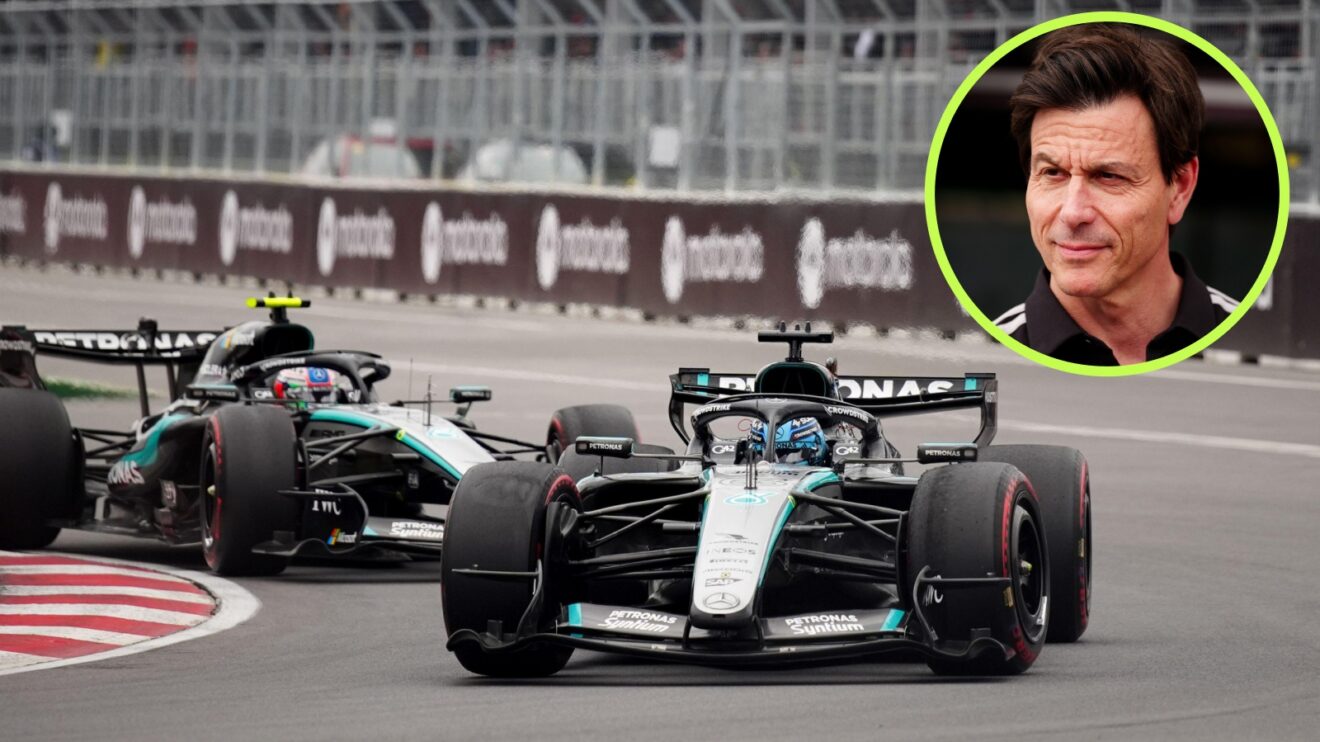
The lap telemetry from Montreal does not lie. George Russell and Kimi Antonelli traded fastest sectors for thirty laps with margins thinner than a tenth, their delta lines pulsing like stressed heart monitors under pressure. Yet the narrative of free racing ignores what the numbers actually forecast: the moment team orders shift from suggestion to algorithm.
The Montreal Traces Expose Raw Exposure
Timing sheets from the Grand Prix show both drivers dipping below their personal benchmarks at the final chicane, with Antonelli locking fronts while tucking back onto the racing line. Russell's power unit failure arrived after those repeated excursions, but the underlying data points to a shared vulnerability. Sprint qualifying already carried an earlier off-track moment where Russell's positioning forced Antonelli wide, a detail preserved in sector splits rather than steward notes.
- Antonelli now sits 43 points clear in the championship, a gap built on consistent top-ten finishes rather than headline wins.
- The Mercedes straight-line advantage measured roughly half a second to the next closest car, creating the buffer that let the fight continue.
- Both drivers briefly exceeded track limits multiple times, yet no double DNF materialized despite the clear statistical probability.
These figures matter because they quantify the exact tolerance window Toto Wolff referenced when he noted another mistake could have produced catastrophe without any over-aggression involved.
Wolff's Thresholds Signal the Coming Robotization
Toto Wolff stated plainly that the current margins will not last. "But that's not going to always be the case," he said, pointing directly at the moment when intra-team battles become too expensive under tighter fields. This language already hints at the data models that will soon dictate pit windows and overtake permissions before drivers even feel the tire degradation curve.
Concentrate on the driving. That's something we clear internally.
The radio exchanges where each driver sought penalties against the other reveal the deeper problem. Modern telemetry feeds every lock-up and every track-limit breach straight to the pit wall in real time. Within five years this same infrastructure will evolve into preemptive algorithms that override driver calls entirely, turning wheel-to-wheel moments into scripted sequences. The sport loses the human variable that once allowed Michael Schumacher in 2004 to nurse a Ferrari through entire weekends on pure feel, posting sector times that rarely deviated more than two-tenths from his own median even when strategy sheets offered no guidance.
Schumacher's 2004 Consistency as Counterpoint
Schumacher's championship run that year produced twenty-one podiums from eighteen races because the team trusted his internal calibration over constant radio updates. Lap-time drop-offs were studied after the fact, not used to micro-manage every braking point. Today's Mercedes approach, by contrast, treats every tenth as a variable requiring immediate correction. The Montreal battle may look thrilling in highlights, yet the underlying pace delta already shows both drivers pushing past sustainable limits once the half-second cushion disappears.
Lists of sector comparisons between the two teammates reveal Antonelli maintaining tighter standard deviation across the stint, a statistical edge that future models will amplify into strict hierarchy rather than continued competition. Wolff's post-race review will likely codify new boundaries based on exactly these numbers.
The Predictable End of Driver-Led Decisions
The data already writes the next chapter. Mercedes will analyze the chicane moments, quantify the double-DNF risk probability, and install clearer intervention triggers before the next race where gaps shrink below three-tenths. What remains is whether the sport still permits any space for the kind of intuitive adjustments Schumacher executed without telemetry dictating every heartbeat of the lap. The Montreal sheets suggest the window is closing fast.
Join the inner circle
Get the deep dives and technical analysis from the world of F1 delivered to your inbox twice a week.
Zero spam. Only high-octane analysis. Unsubscribe anytime.
Continue Reading
View More News