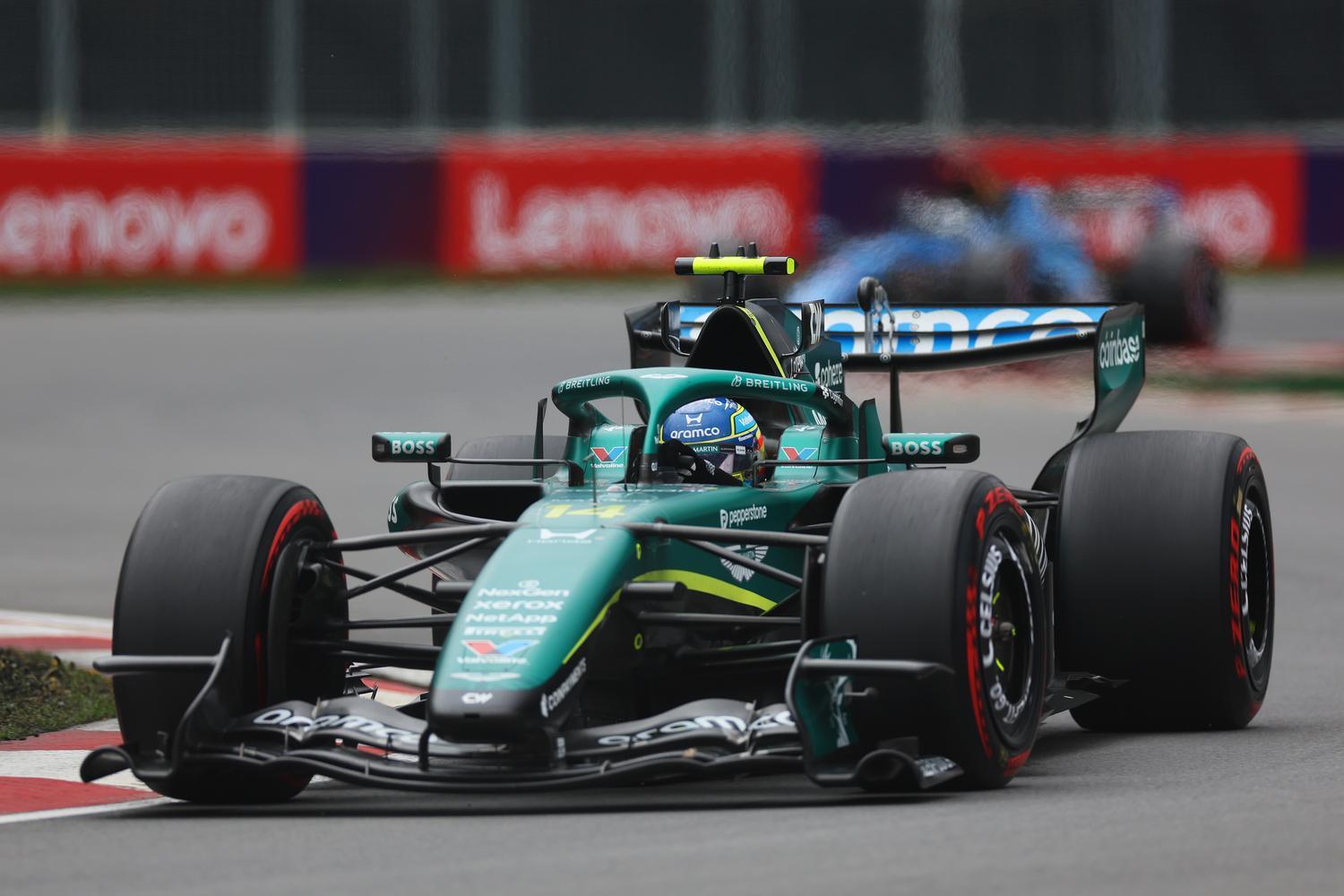
Alonso quit Canadian GP to ‘stop the pain’ from seat ordeal
Fernando Alonso retired from the Canadian Grand Prix after 23 laps due to unbearable seat discomfort, with Aston Martin admitting they may have pushed cockpit positioning too far in pursuit of performance.
For 23 laps in Montreal, Fernando Alonso fought through discomfort that had already ruined part of his weekend. Then the pain became too much.
The veteran Spaniard parked his Aston Martin during the Canadian Grand Prix after an ongoing seat issue turned an already difficult race into a physical ordeal. By the time Alonso climbed out of the car at Circuit Gilles Villeneuve, points were already well out of reach and the weather chaos the team had hoped for never arrived. Instead of gambling on an unlikely turnaround, Alonso and Aston Martin made a blunt decision: enough was enough.
“We had this seat issue where I feel more and more uncomfortable with the laps,” Alonso told reporters. “The position doesn't feel the right one, and we were obviously out of the points, quite far from the points, and no threat of rain anymore. So we decided to stop the pain.”
The problem was not new. Alonso had already experienced the same discomfort during Saturday’s sprint race, prompting Aston Martin to attempt overnight modifications before Sunday’s main event. Those changes failed to solve the issue.
Why it matters:
Alonso’s retirement underscores the extreme physical demands of modern F1 cockpit designs, where drivers are placed increasingly low for aerodynamic gain. It also highlights Aston Martin’s deeper competitive struggles – a team that has fallen to the back of the grid and cannot afford to lose its star driver to preventable discomfort.
The details:
- Aston Martin trackside chief Mike Krack admitted the team may have pushed cockpit positioning too far. “He has been uncomfortable for a while,” Krack said. “It's like a pressure point that gets worse and worse. We need to reconsider a little bit the positioning.”
- Krack noted that modern cars force drivers into more “lying positions” as teams prioritize aerodynamics. “Maybe we have done a step too far,” he added.
- Alonso showed brief promise early in the race, attacking on soft tyres while rivals struggled on intermediates, briefly climbing into the top 10. “I could take more risk,” he said. But once conditions stabilized, he fell back to “our natural position at the back.”
- The two-time champion insisted Aston Martin is making incremental progress behind the scenes – improved gearbox sync and downshifting – but acknowledged the fundamental gap of “three seconds of pace” will require new engine and aero parts later this year.
What's next:
Alonso expects small setup improvements before Monaco, but the team’s deeper performance deficit won’t be addressed until after the summer break. “The fundamental problem will have to come from the power of the engine and from the aero package,” he said. “And that will only come in the second part of the year.”
Don't miss the next lap
Get the deep dives and technical analysis from the world of F1 delivered to your inbox twice a week.
Zero spam. Only high-octane analysis. Unsubscribe anytime.
Join the inner circle
Get the deep dives and technical analysis from the world of F1 delivered to your inbox twice a week.
Zero spam. Only high-octane analysis. Unsubscribe anytime.
Continue Reading
View More News