Jos Verstappen challenges Max to try rallying
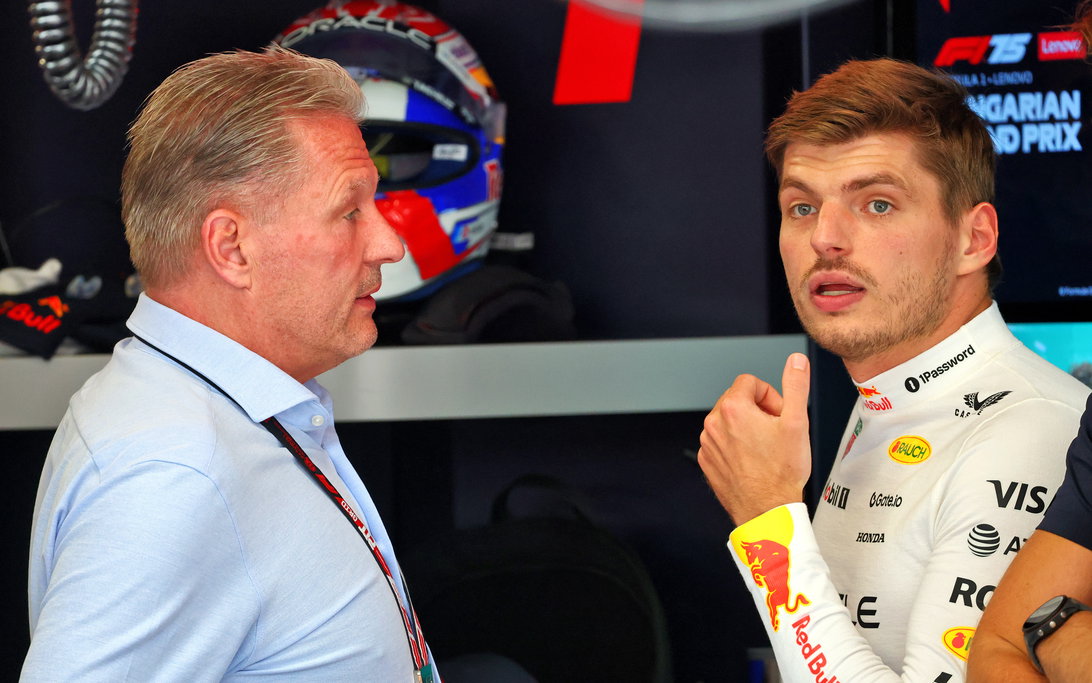
Jos Verstappen has formally challenged his son Max to try rally driving, countering the F1 champion's safety concerns with a sarcastic jab at Max's own racing activities. Jos insists that experiencing the sport's detailed pace-note system and focused mindset would change Max's view, highlighting a fundamental difference in risk perception between circuit and stage racing.
Jos Verstappen has publicly invited his son, four-time F1 champion Max, to experience rallying firsthand, directly challenging Max's repeated assertions that the discipline is too dangerous. The elder Verstappen, now a competitor in the European Rally Championship, sarcastically dismissed his son's concerns by referencing Max's own extracurricular racing, suggesting a proper rally stage would change his perspective.
Why it matters:
This public challenge highlights a fundamental clash in risk perception between two generations of elite racing drivers. It goes beyond a family debate, touching on the cultural differences between the controlled, circuit-based world of Formula 1 and the unpredictable, obstacle-lined stages of rallying. How a driver like Max, who is known for pushing limits, defines 'acceptable risk' is a revealing look into the mindset of a modern champion.
The details:
- Jos Verstappen issued the invitation in an interview, pointedly remarking, "No, racing in a GT3 at the Nürburgring, that's nice and safe... He should just come and do it once... And then he'll talk differently about it."
- Max has been clear about his reluctance, telling a podcast his limit is hitting immovable objects: "I just think about if I make a mistake and I hit a tree...the tree is not moving." He contrasts this with F1's engineered crash barriers designed to absorb impact.
- Jos acknowledges the danger but explains that a rally driver's focus shifts. "He always talks about the trees and so on, but at a certain point you don't see those trees anymore," he said. "You know they're there. You take them into account. But you don't focus on them."
- The former F1 driver emphasized that rallying is not about blind aggression but meticulous risk management, primarily through the use of detailed pace notes that describe the road ahead.
- Jos conceded that age changes one's approach, stating, "I do think you take more risks when you're 29 years old," an admission underscored by his own rally incidents, including a roll in Scandinavia and a high-speed impact with a tree stump.
What's next:
Whether Max accepts his father's 'black and white' invitation remains to be seen. The challenge sits at an interesting crossroads: it's an offer to expand his motorsport horizons from a trusted source, yet it conflicts with his clearly stated safety calculus. While a one-off experience seems unlikely to alter Max's primary career focus, it would provide a unique insight into the different skills and mental frameworks that define top-level drivers across motorsport's disciplines. For now, the debate encapsulates the enduring contrast between the precision of the track and the raw, managed chaos of the forest stage.
Don't miss the next lap
Get the deep dives and technical analysis from the world of F1 delivered to your inbox twice a week.
Zero spam. Only high-octane analysis. Unsubscribe anytime.
Join the inner circle
Get the deep dives and technical analysis from the world of F1 delivered to your inbox twice a week.
Zero spam. Only high-octane analysis. Unsubscribe anytime.
Continue Reading
View More News